
Schools today have more technology than ever before. Students may use learning management systems, digital calendars, Google Classroom, online textbooks, student portals, testing platforms, email, messaging apps and countless other tools just to manage one school day. Technology has opened the door to incredible opportunities, but for many students, especially neurodivergent learners, the amount of information can become overwhelming. When a student has to spend more time figuring out where to go, what to click, what is due and what to do next than actually learning, technology can become part of the problem instead of part of the solution.
The need for better support is significant. In 2022–23, about 7.5 million U.S. students—roughly 15% of public school students—received special education services. At the same time, academic performance has declined in key areas. Since 2020, 13-year-olds saw average scores drop 4 points in reading and 9 points in math. While many factors contribute to these challenges, the data highlight the need for better ways to support students.
And this is where the conversation about technology becomes important.
Technology itself is not the enemy. In fact, research shows that technology can support learning when it is used intentionally. OECD research found that students who used digital devices for learning for a moderate amount of time generally performed better in mathematics than students who did not use them at all. But there is another side to the story: about 30% of U.S. students reported being distracted by digital devices during mathematics lessons. The OECD also found that students who experienced frequent digital distraction from other students tended to have lower mathematics performance.
The lesson isn’t that schools should use less technology. The lesson is that technology needs to be designed better.
For a neurodivergent learner, an interface filled with tabs, icons, notifications, links, colors and competing pieces of information can create unnecessary cognitive load. The information may technically be available, but that doesn’t mean it is easy to find or understand. A student may know how to complete an assignment but still struggle to determine which assignment needs to be completed first. They may understand the material but become overwhelmed trying to locate the instructions. They may have five different applications open simply because school requires them to move between five different systems.
This is why presentation matters.
The way information is presented can make the difference between a student thinking, “I don’t know where to start,” and “I know exactly what I need to do.” Clear headings, predictable navigation, simple language, organized information and visual hierarchy can reduce the amount of mental energy a student has to spend managing the technology. Instead of asking the learner to organize the information, the technology can do some of that organizational work for them.
Simplicity does not mean making learning simple. A student can be studying advanced mathematics, analyzing a novel, conducting a science experiment or preparing for a major test while using an extremely simple organizational system. The academic work can remain challenging. What becomes easier is navigating the path to that work.
Think about an airport. Flying from one city to another is incredibly complicated, but passengers don’t need to understand everything happening behind the scenes. They simply need clear signs telling them where to check in, where to go through security and where to find their gate. The complexity exists behind the scenes so the experience feels simple for the person using it.
Educational technology should work the same way.
Instead of giving students another complicated platform to learn, technology should help organize the complicated platforms they already have. Instead of showing everything at once, it should prioritize what matters most. Instead of making students search through multiple applications to figure out what is due, it should give them a clear picture of what is happening today and what is coming next.
This is especially important for students who struggle with executive functioning, attention, organization or processing large amounts of information. The goal should not be to make students adapt to technology. The goal should be to make technology adapt to the learner.
That idea is at the heart of Clarity Space®.
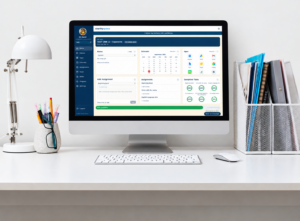
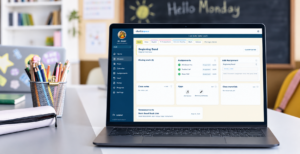
Clarity Space® was created around a simple question: What if a student’s technology actually helped them feel organized instead of making them feel more overwhelmed? The goal is to bring important information into one clear environment where students can see assignments, notes, calendars, applications, completed work and progress without having to constantly search through different systems.
The philosophy is simple: less searching, less confusion and more clarity.
A student should be able to open their computer and quickly understand what is happening. What is due today? What is coming up? What have I completed? What do I need to work on next? Where do I go to complete it?
Those questions shouldn’t require ten browser tabs and a scavenger hunt.
As schools continue to invest in technology, we have an opportunity to rethink what educational technology should actually accomplish. The next generation of EdTech shouldn’t simply be about adding more features, more notifications or more places to store information. It should be about creating better experiences for the students who use it.
Because technology should remove barriers—not create new ones.
For neurodivergent learners, a clear screen, a predictable layout and a simple path forward can make a meaningful difference. When we reduce the unnecessary complexity surrounding learning, we give students more mental space to focus on the thing that matters most:
learning itself.
And sometimes, the most powerful innovation isn’t adding more.
It’s making things clearer.