The pandemic changed education almost overnight. Classrooms moved online, assignments that once lived on desks and in backpacks suddenly appeared across digital platforms, and students were expected to navigate a new world of learning from a computer. Teachers quickly adapted to new technology, parents became part-time technology troubleshooters, and students learned how to attend class, submit assignments, communicate with teachers, and complete their schoolwork online.
Technology became an essential part of education—and in many ways, it worked. Teachers could post assignments, share resources, communicate with students and families, collect work, and manage grades. Students could access lessons and assignments from almost anywhere. What began as a necessity during the pandemic eventually became a permanent part of the educational experience.
But as technology advanced, an important question remained: Was the digital school experience actually designed around the student?
In many cases, the answer is complicated. Most educational technology was created to help schools and teachers manage instruction. Teachers need to create assignments, distribute materials, communicate with students, record grades, and monitor progress. Learning management systems and classroom platforms are built to accomplish those tasks—and they can be extremely effective at doing so. But the student’s experience is different. A student doesn’t necessarily need to know how an assignment was created or where a teacher posted it. They simply need to know what they are supposed to do, when it is due, where to find it, and what they should work on next.
Today, a student’s school day can be spread across multiple platforms. One teacher may use Canvas, another may use Google Classroom, another may communicate primarily through email, while assignments, textbooks, quizzes, projects, and other materials may live in entirely different applications. Each individual system may work exactly as intended, but from the student’s perspective, the experience can feel fragmented. Instead of having one clear picture of their school responsibilities, students are often expected to piece that picture together themselves.
For some students, this may simply be inconvenient. For others, it can become a significant barrier to learning. Students who struggle with organization, executive functioning, attention, reading, or processing information may have an especially difficult time keeping track of multiple platforms, passwords, notifications, assignments, instructions, and deadlines. Even students without identified learning challenges can become overwhelmed when they have to constantly search for information just to figure out what they need to do.
The problem isn’t necessarily a lack of technology. In fact, there may be more educational technology available to students today than ever before. The problem is that more technology doesn’t automatically create a better student experience. When information is scattered across multiple systems, students can end up spending valuable mental energy managing the technology instead of focusing on the learning itself.
There is a fundamental difference between information being available and information being accessible. An assignment may be posted correctly. The instructions may be there. The due date may be listed. The teacher may have communicated everything the student needs to know. But if the student has to search through several platforms to find that information, determine which notification matters, remember where the assignment lives, and figure out what needs attention first, the system is still placing much of the organizational burden on the student.
This raises an important question: What would happen if we designed the digital school experience from the student’s perspective?
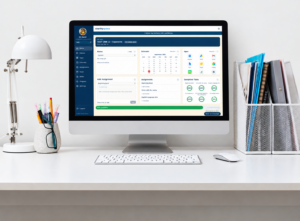
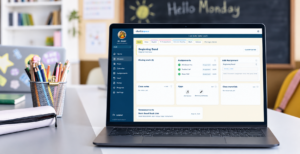
Instead of asking students to navigate a collection of disconnected systems, imagine giving them one simple place that brings the information they already have together. A place where they can immediately see what is due today, what is coming up, what may be missing, which messages need attention, and where each assignment can be found. The underlying school systems wouldn’t necessarily have to change. The experience for the student could simply become easier to understand and navigate.
Clarity Space® was created around a simple belief: students shouldn’t have to be technology experts to be successful in school. The goal isn’t to replace the tools schools and teachers already use. It’s to create a student-centered layer that helps bring the information from those tools together in a way that makes sense to the student.
Because students don’t experience school as a collection of platforms. They experience it as one school day.
They shouldn’t have to think, Which system do I need to check? Where did my teacher put that? Did I miss an email? Was that assignment in Canvas or somewhere else? What am I supposed to do first?
They should be able to open one place and see what matters.
The pandemic accelerated the digital transformation of education. Now that technology is firmly embedded in the classroom, perhaps it’s time to take the next step and ask whether the digital experience is working for the people at the center of education: the students.
The future of educational technology shouldn’t simply be about adding more tools. It should be about creating a better experience—one that helps students spend less time searching, organizing, and figuring out where things are, and more time actually learning.
Because every student, however their brain works, deserves one calm place to see what matters.
Get Clarity.